
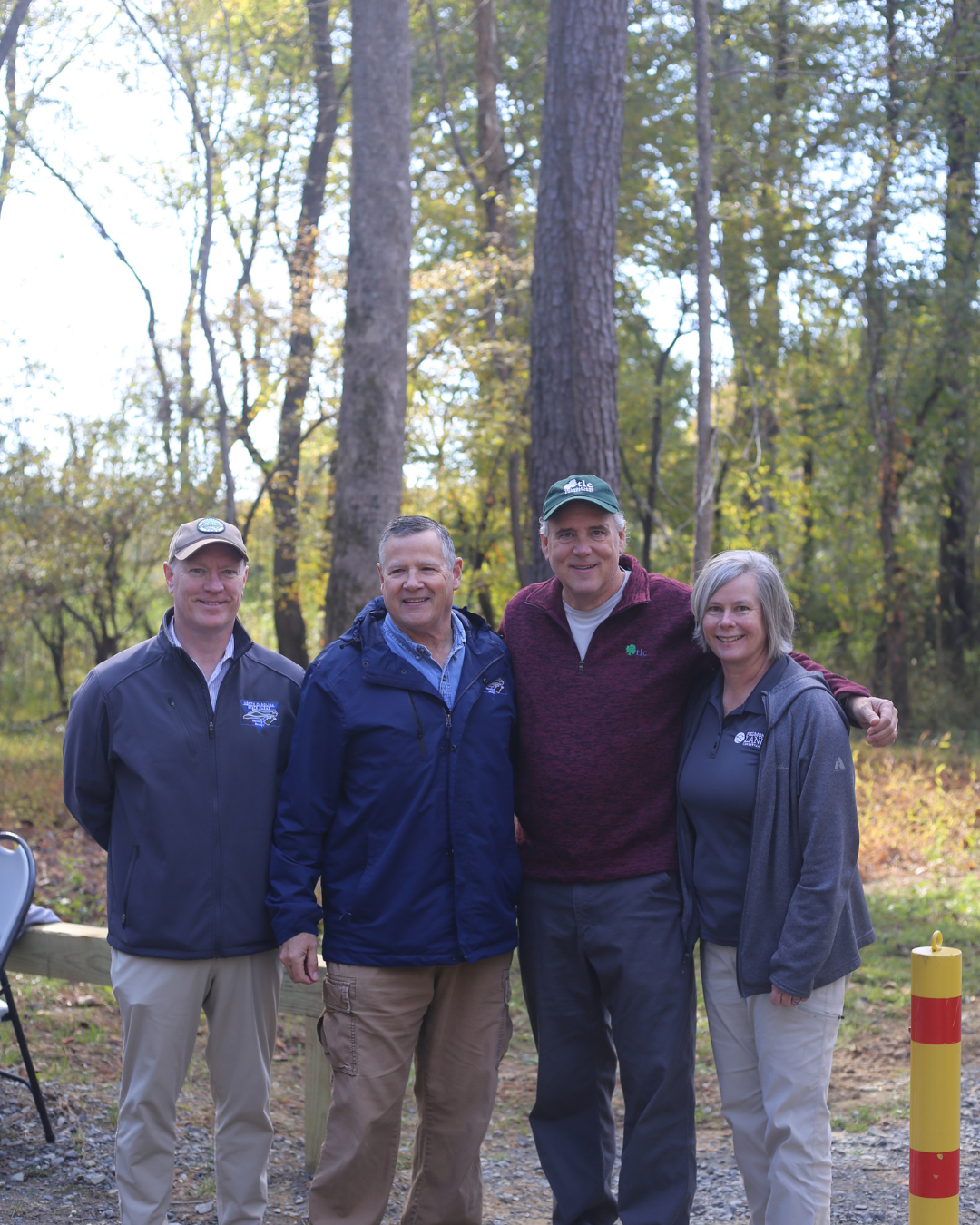
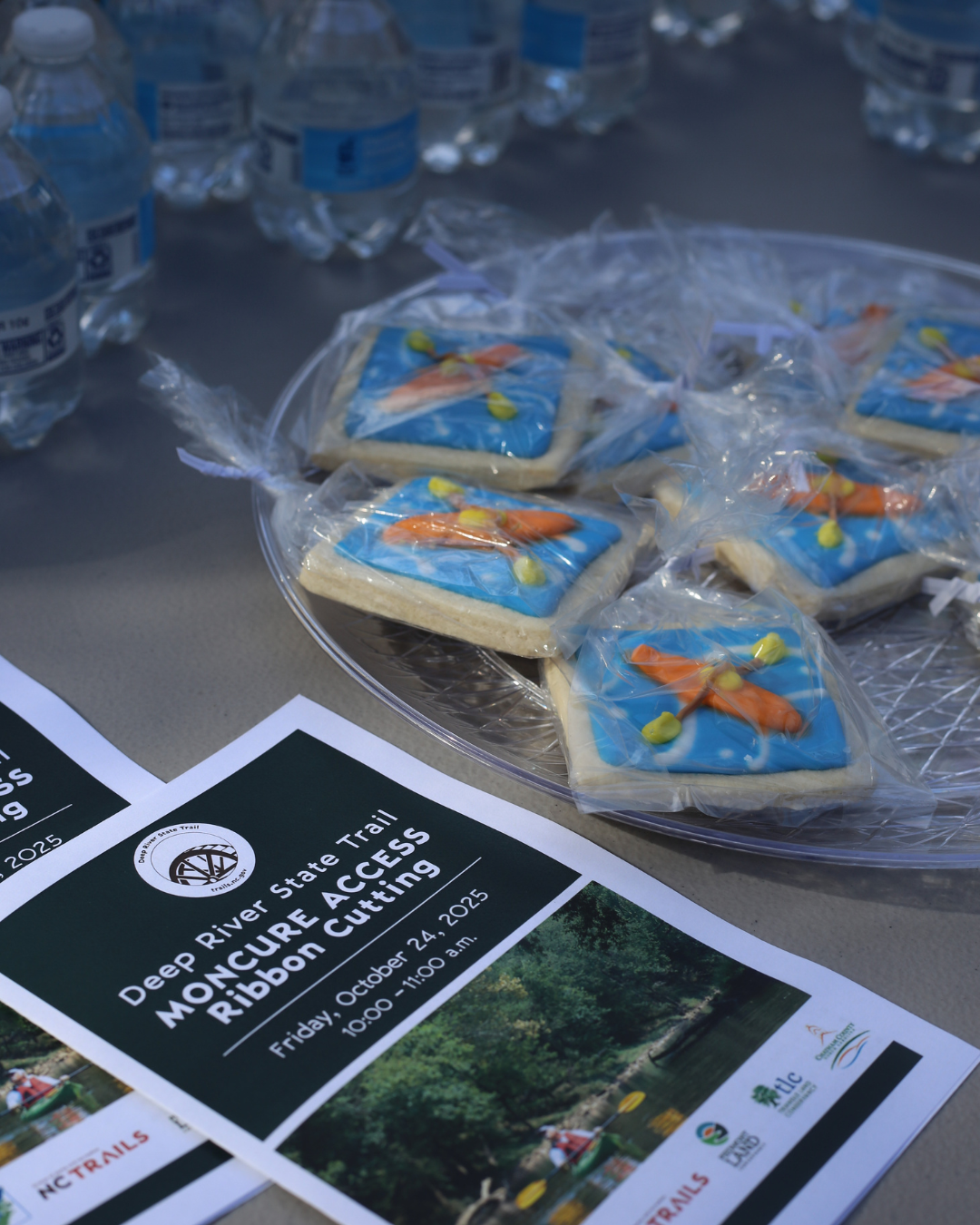
Last month, TLC staff joined partners and community members to celebrate the ribbon cutting for a new boat access on the Deep River State Trail in Moncure, NC.
In 2003, Triangle Land Conservancy (TLC) acquired the 760-acre Justice Lands near Moncure – an ecologically significant tract that protects wildlife habitat, safeguards clean water in the Deep River, and anchors recreational opportunities along the Lower Deep River. The “Justice Lands” is part of a larger, 2,400-acre conservation parcel that includes White Pines Nature Preserve.
In 2005, TLC transferred the land to the state of North Carolina to be managed by the North Carolina Division of Parks and Recreation, which oversees the state parks system.
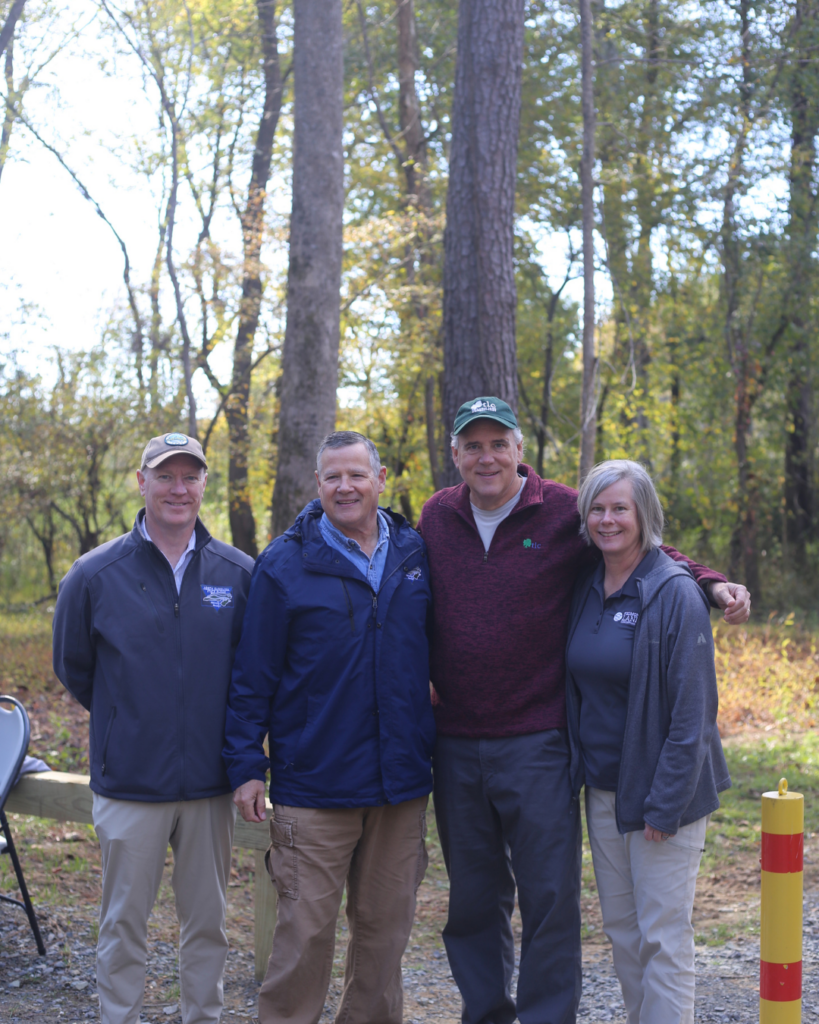
“The Deep River has been a conservation priority for TLC since we started in 1983, and the protection of the Justice Lands shows what’s possible when partners work together,” said Sandy Sweitzer, Executive Director of TLC. “We are delighted to see this project come to fruition after protecting the land more than 20 years ago.”
The ceremony included remarks by NC Department of Natural and Cultural Resources Deputy Secretary Jeff Michael, NC State Parks Director Brian Strong, Piedmont Land Conservancy Conservation Planner Palmer McIntyre, and TLC’s Director of Conservation Bo Howes. Each of the speakers emphasized the power of partnerships in conservation.
The Moncure Access currently has a launch point for kayaks and canoes as well as vault toilet facilities and a new entrance road. With the addition of this access, there are now five put-in and put-out points along a 26-mile stretch of the Deep River, starting from the Carbonton Access in Sanford.
About the Deep River
The Deep River, named for its steep banks rather than the depth of its water, flows 125 miles from its headwaters near High Point and meets the Haw River near Moncure to form the Cape Fear. The stretch dividing Chatham and Lee counties is a favorite paddling spot, with convenient public access and easy daytrip options. This mostly calm waterway, accented with gentle Class I rapids, welcomes both seasoned paddlers and beginners.
The river once served as a vital trade route, though rapids and low water made transport to downstream markets difficult. From the late 1700s to mid-1800s, several companies tried to improve navigation with locks and dams, but efforts were abandoned when local iron and coal proved unprofitable.
The Moncure Access (7140 Moncure Pittsboro Rd, Moncure, NC 27759) is open daily from dawn to dusk and is managed by State Parks staff at Jordan Lake State Recreation Area. Learn more about the Deep River State Trail.

