The challenges facing us today are too big for any one person.
The change in the Triangle is too rapid for any of us to tackle alone. We know you feel these impacts of development and the changing climates as much as we do.
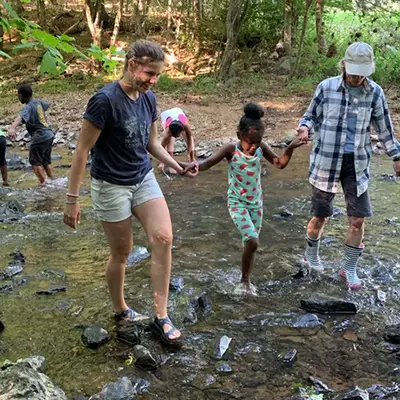
TLC provides more than 55 miles of walking and mountain biking trails and hundreds of events to get people outside. Studies have shown that time in nature can lower blood pressure, enhance the immune system, increase self- esteem, reduce anxiety, and improve mood. TLC’s expanded education and outreach programs inspire everyone – especially younger and more diverse people who will champion the environment in the future – can enjoy positive outdoor activities and the mental and physical health benefits they provide.
Protect Farmland and Reduce Barriers to Land Ownership
TLC is racing to secure conservation easements to protect local farms, food, and agricultural jobs; clean our drinking water; and provide wildlife habitat. Our Good Ground Initiative uses conservation tools like “buy, conserve, and sell” to increase farmland protection and provide land ownership opportunities for historically underserved farmers.
Safeguard our Drinking Water and Strengthen Climate Resilience
TLC protects wetlands, forests, and floodplains that absorb pollutants and slow downstream flooding. Well-managed farms slow run-off and sequester carbon in the soil. Every parcel of natural land that TLC protects means less carbon dioxide being pumped into the air we breathe.
Slow the Rapid Loss of Biodiversity
TLC’s commitment to protecting the region’s state-designated Natural Heritage Sites and wildlife corridors, along with the restoration of forests and wetlands, is crucial to protecting habitats and increasing species survival.
Learn how partnering with TLC will bring solutions that benefit us all.
Worldwide we are experiencing the greatest acceleration in animal and plant species extinction in human history. North Carolina is one of the most biodiverse states in the country, yet rapid development across the Triangle is destroying natural habitats at an alarming rate.
Increase in Natural Disasters
Extreme weather events are increasing in frequency causing flooding, droughts, hurricanes, tornadoes, and massive wildfires. Lower-income communities are disproportionately impacted, largely due to historical racial inequities.
Inequitable Access to Land and Nature
For generations, people of color were denied access to public parks and beaches. By 2050, people of color will make up 45% of our local population yet nearly 75% of US communities of color lack access to safe and maintained outdoor spaces — compared with 23% of White communities. We must inspire and engage more diverse citizens to advocate for equity in land ownership and promote preservation.
Declining Public Health
Experts recently declared a national emergency in child and adolescent mental health with rates of depression, anxiety, and trauma soaring. Children spend an average of 6.5 hours a day in front of a screen and almost half of adults don’t get enough physical activity that is key to preventing chronic conditions like heart disease, cancer, diabetes, and depression.
Disappearing Farms
By 2040, North Carolina is expected to develop 11% of its farmland, nearly 1.2 million acres, the second-highest rate of conversion in the country. Johnston and Wake are the 19th and 32nd most vulnerable counties in the U.S. Since 2014, Wake County has lost 22,964 acres of farm and forest land — that’s almost 20%. Historically, land ownership by Black farmers has dropped more than 85% in the US over the last century.
Exponential Growth and Development
North Carolina is one of the fastest-growing states in the nation, and the Triangle is predicted to attract 40% of projected growth. In the last decade, one in four new residents moved to Wake County, and Johnston County is seeing the fastest percentage growth in the state. The pace of development is forcing land prices to skyrocket throughout the region.