Triangle Land Conservancy Announces Two Conservation Easements in Chatham County

Triangle Land Conservancy continues to build strong momentum for agricultural lands protection in Chatham County thanks to local government support. TLC recently closed two conservation easements totaling over 225 acres on Chatham County farms.  

“What’s happening in Chatham County is heartening,” said Sandy Sweitzer, TLC executive director. “These two projects demonstrate the importance of state and county government investment, particularly as farmland is disappearing so fast in this beautiful area.”
January2026 StensavadCeromony 6
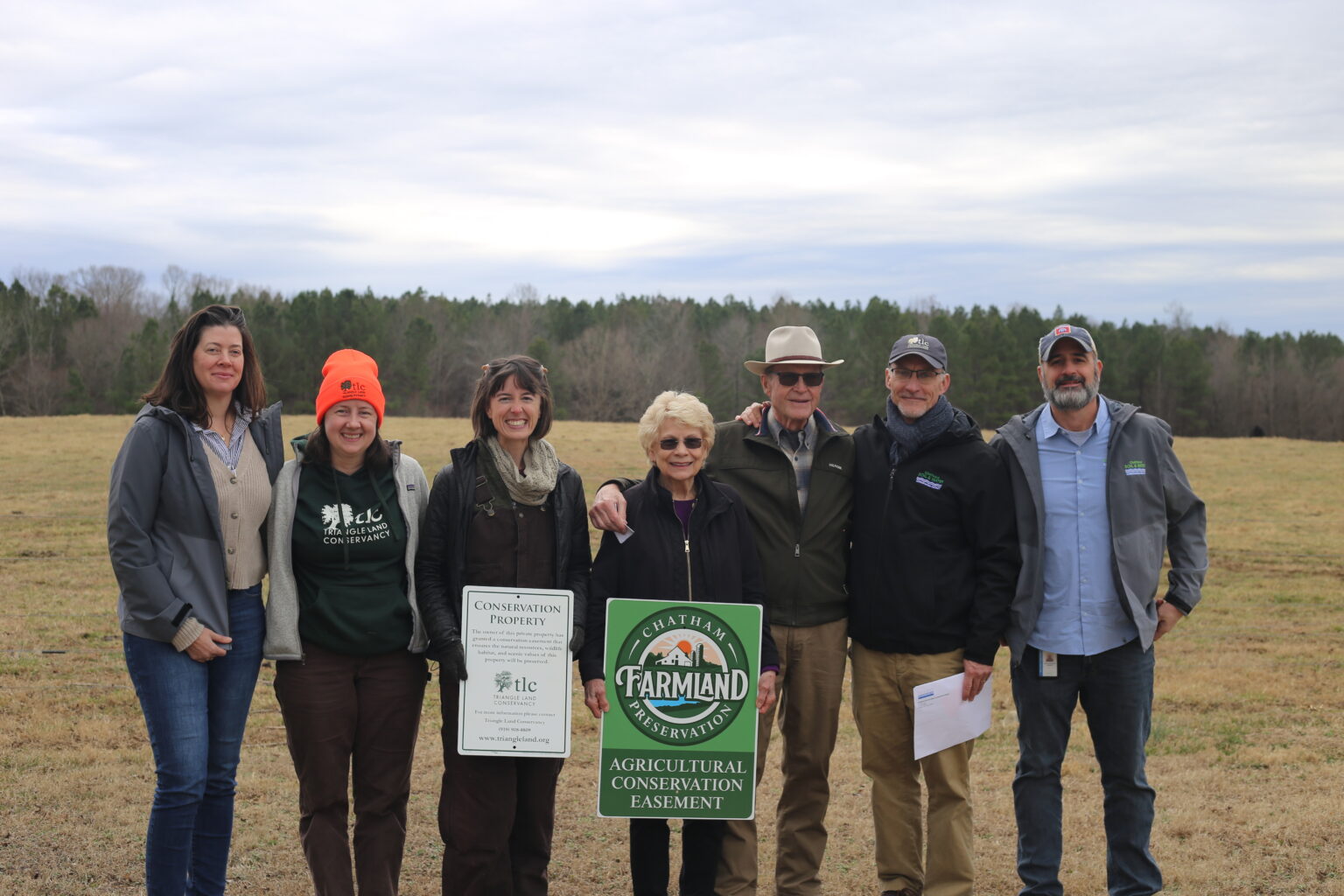
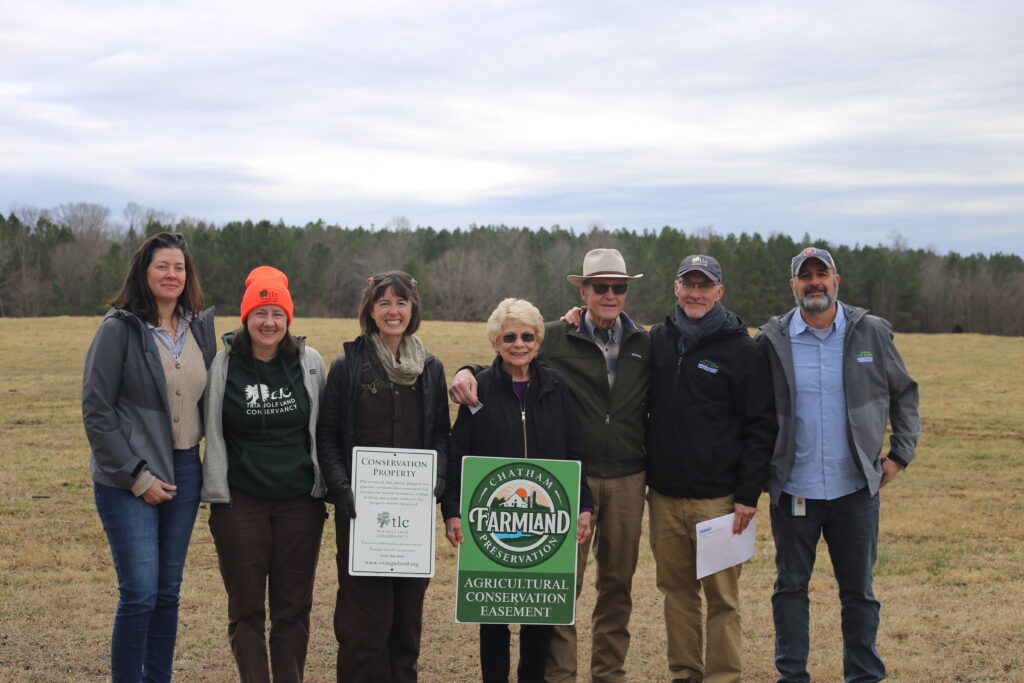
Chatham County and Triangle Land Conservancy joined the Stensvad family to celebrate the protection of their 59-acre farm – one of two recent conservation projects supported by the Chatham County government. Pictured (left to right): Susannah Goldston (District Director of Chatham Soil & Water Conservation District) Margaret Sands (TLC Associate Director of Land Protection, West), Emma Childs (TLC Working Lands Manager), Linda Stensvad, Doug Stensvad, Andrew Waters (Farmland Preservation Coordinator), and Joe Trimnal (Soil Conservation Specialist). Photo by Florencia Loncán 

In February, TLC closed a conservation easement on the 165-acre James N. McNaull Memorial Forest located northwest of Pittsboro. The property has been managed as a forestry investment since it was purchased in 1990, and its current owners were committed to seeing it permanently protected.

TLC closed this project with funds from the North Carolina Agricultural Development and Farmland Preservation Trust Fund (NCADFP), which will prevent subdivision and large-scale development while permitting forestry activities necessary to maintain a working business on the land. 
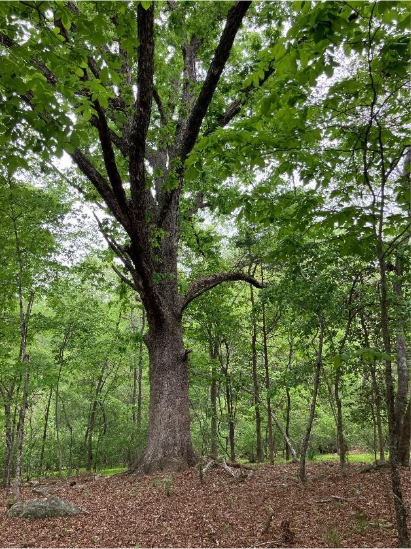
image 9
Great white oak growing on the 165-acre James McNaull Memorial Forest. Photo by Emma Childs

This tract joins two other TLC-owned conservation easements northwest of Pittsboro (Manco Dairy, Harlands Creek Farm) to form nearly 600 acres of contiguous rural and agricultural buffer north of U.S. 64.  

In addition to farmland, working forests represent an important component of agricultural lands protection. Forests with thoughtful, professionally written forest management plans can meet community needs for forest products like paper and furniture while also ensuring long-term habitat and connectivity that fosters biodiversity and clean water.

On December 9, 2025, TLC finalized a conservation easement on Stensvad Farm, a 59-acre working lands property in the Snow Camp area near the Silk Hope farming region. The project was the first to utilize Chatham County-allocated farmland preservation funds to cover transaction costs. Much of the farm consists of prime farmland soils or soils of statewide importance, and approximately 1,920 feet of stream run through the property.  

“The reason we wanted to preserve this place, this farmland, is to prevent it from being developed in the future and being taken out of farm food production,” said landowner Doug Stensvad.  Establishing this conservation easement will help protect water quality within the Rocky River watershed and downstream into the Cape Fear River basin. 

Together, these projects reflect a growing commitment by Chatham County landowners, conservation partners, and local government to protect working farms and forests, preserve water quality, and maintain the county’s rural character for future generations. 

Vanishing Wildlife Habitat

Worldwide we are experiencing the greatest acceleration in animal and plant species extinction in human history. North Carolina is one of the most biodiverse states in the country, yet rapid development across the Triangle is destroying natural habitats at an alarming rate.

Increase in Natural Disasters

Extreme weather events are increasing in frequency causing flooding, droughts, hurricanes, tornadoes, and massive wildfires. Lower-income communities are disproportionately impacted, largely due to historical racial inequities.

Inequitable Access to Land and Nature

For generations, people of color were denied access to public parks and beaches. By 2050, people of color will make up 45% of our local population yet nearly 75% of US communities of color lack access to safe and maintained outdoor spaces — compared with 23% of White communities. We must inspire and engage more diverse citizens to advocate for equity in land ownership and promote preservation.

Declining Public Health

Experts recently declared a national emergency in child and adolescent mental health with rates of depression, anxiety, and trauma soaring. Children spend an average of 6.5 hours a day in front of a screen and almost half of adults don’t get enough physical activity that is key to preventing chronic conditions like heart disease, cancer, diabetes, and depression.

Disappearing Farms

By 2040, North Carolina is expected to develop 11% of its farmland, nearly 1.2 million acres, the second-highest rate of conversion in the country. Johnston and Wake are the 19th and 32nd most vulnerable counties in the U.S. Since 2014, Wake County has lost 22,964 acres of farm and forest land — that’s almost 20%. Historically, land ownership by Black farmers has dropped more than 85% in the US over the last century.

Exponential Growth and Development

North Carolina is one of the fastest-growing states in the nation, and the Triangle is predicted to attract 40% of projected growth. In the last decade, one in four new residents moved to Wake County, and Johnston County is seeing the fastest percentage growth in the state. The pace of development is forcing land prices to skyrocket throughout the region.