
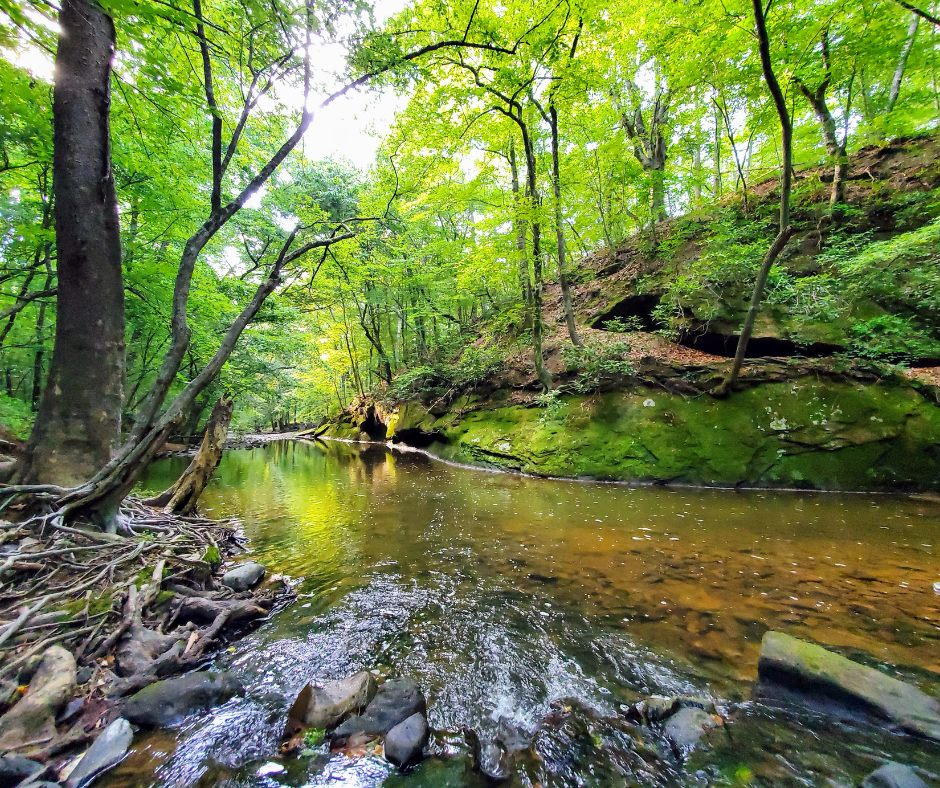
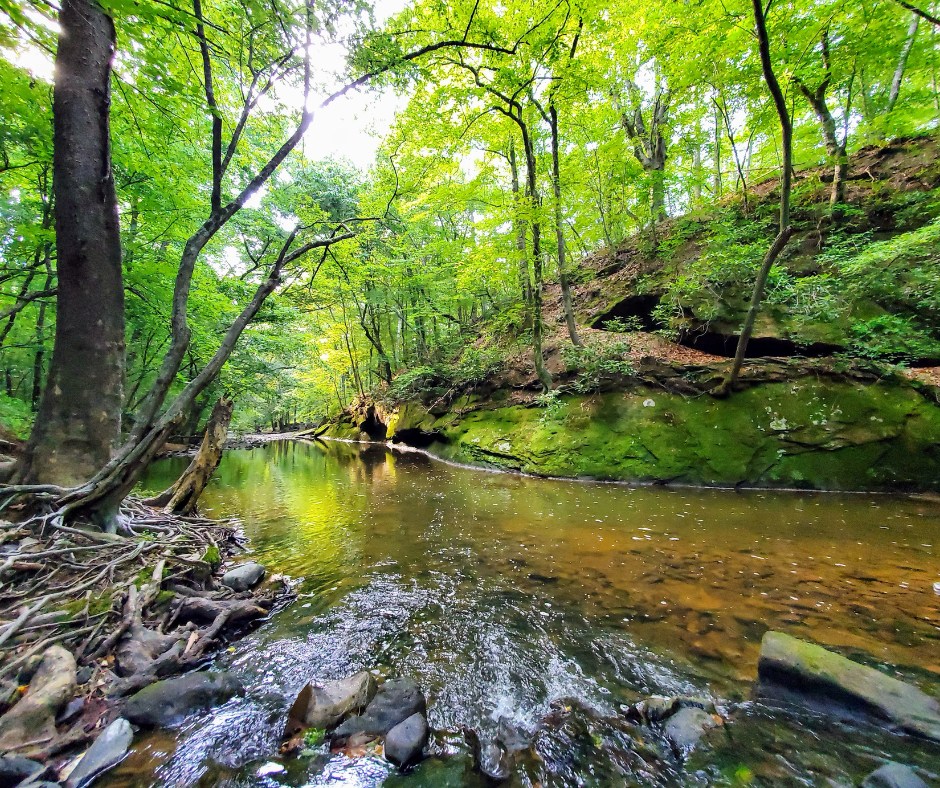
DURHAM, NC (October 14, 2025) — Triangle Land Conservancy and the Duke Forest at Duke University are working together on a major stream restoration project along New Hope Creek. Funded by members of the Duke Forest community and the North Carolina Land and Water Fund, the project also includes the establishment of a conservation easement. Key improvements include replacing an aging, low-water bridge with a new clear-span bridge and removing the remains of a dam. These efforts will enhance water quality and improve aquatic habitat in this ecologically important area.
As part of this effort, the Duke Forest donated a conservation easement to TLC, permanently protecting 152 acres of critical riparian buffer along New Hope Creek. This stretch of creek provides vital habitat for important species, including the federally-threatened Atlantic Pigtoe, a freshwater mussel native to North Carolina and Virginia, and one of its host species, the Creek Chub.
Since TLC’s founding, New Hope Creek has been a priority conservation area. The opportunity to partner with Duke Forest to both restore the creek and secure permanent protection for the adjacent Duke Forest lands, which provide invaluable ecological, educational, and recreational benefits to the region, is a significant win-win for TLC and Duke. TLC holds one additional easement on a small section of the Duke Forest adjacent to Johnston Mill Nature Preserve. While Duke University does not intend to sell or develop any portion of the Forest, permanent conservation ensures that these lands remain protected for future generations.
“This partnership with the Duke Forest represents a significant step toward safeguarding the health of New Hope Creek and preserving one of our region’s most treasured landscapes,” said Sandy Sweitzer, Executive Director of Triangle Land Conservancy. “We’re honored to support this restoration and conservation initiative.”
Sara Childs, Executive Director of the Duke Forest, reflected, “By permanently protecting this landscape with Triangle Land Conservancy, we are ensuring that the investment in restoring habitat, improving water quality, and supporting research will endure for generations to come.”
While restoration work is underway, certain authorized roads and trails near New Hope Creek are temporarily closed for public safety. Visitors are encouraged to explore other open areas of the Duke Forest (weekends only during deer management season) or nearby Triangle Land Conservancy recreation areas (7 days/week). For details on the ecological impact of the restoration projects and the latest updates, please visit the Duke Forest’s website.

