By Cara Lewis, Senior Communications Manager
A record 2,350 people descended on Providence, Rhode Island in late September to attend Rally 2024, the national gathering of the land trust community hosted by the Land Trust Alliance. The alliance represents approximately 1,000-member land trusts and affiliates supported by more than 250,000 volunteers and 6.3 million members nationwide.
Following the Indigenous Land Conservation Summit and two days of field trips, several staff and former board members of TLC received awards and participated in timely workshops.
Mavis Gragg receives prestigious conservation leadership award
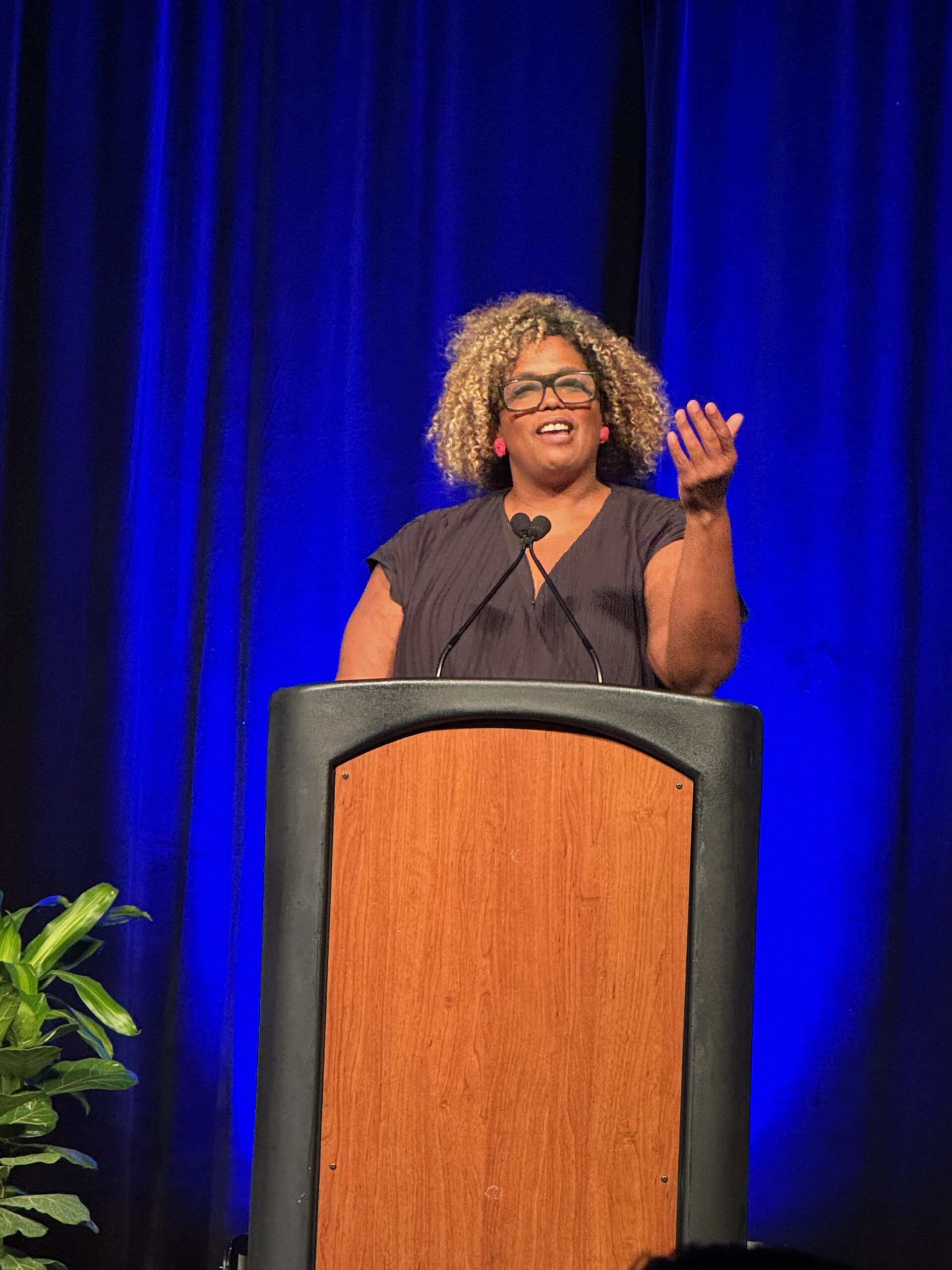
Attorney, conservationist, and former TLC board chair, Mavis Gragg was presented with the distinguished Kingsbury Browne Conservation Leadership Award. Named for Kingsbury Browne, the conservationist who inspired the Alliance’s founding in 1982, the award ranks among the organization’s highest honors. Gragg will serve as the Kingsbury Browne distinguished practitioner for the Lincoln Institute of Land Policy in Cambridge, Mass., for 2024-2025.
“The word that comes to mind when I think about Mavis is ‘connector,’ because that’s what she does — she connects people to each other and she connects people to the resources they need to achieve their land goals,” said Jennifer Miller Herzog, interim president and CEO of the Land Trust Alliance.
“Mavis came to conservation through people, focusing on family land retention following her own family’s experience with heirs’ property. And in her work, she has continued to put people first with a tirelessness and a generosity of spirit that is unmatched.”
TLC and UCAN share lessons learned during historic land deed transfer
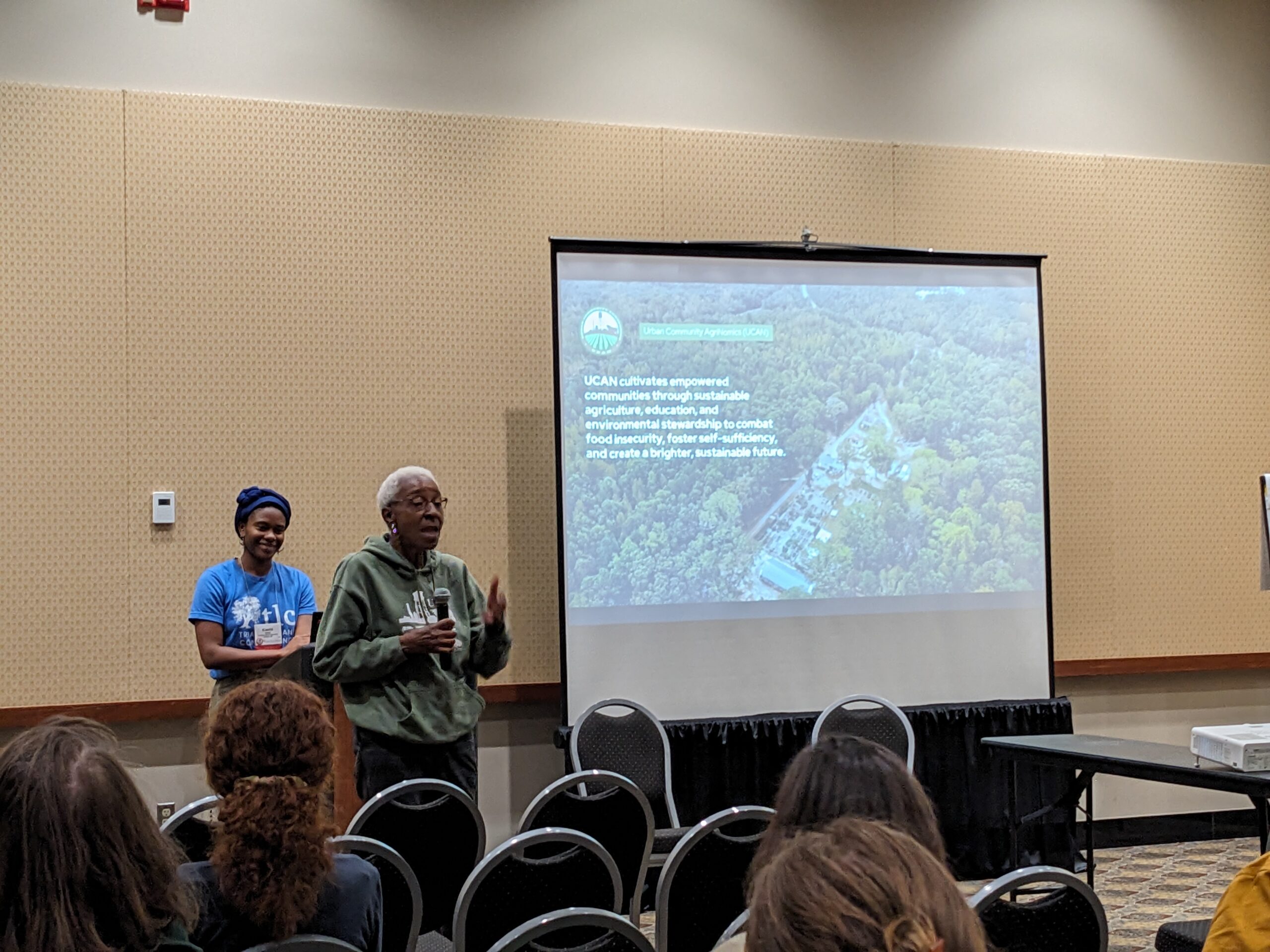
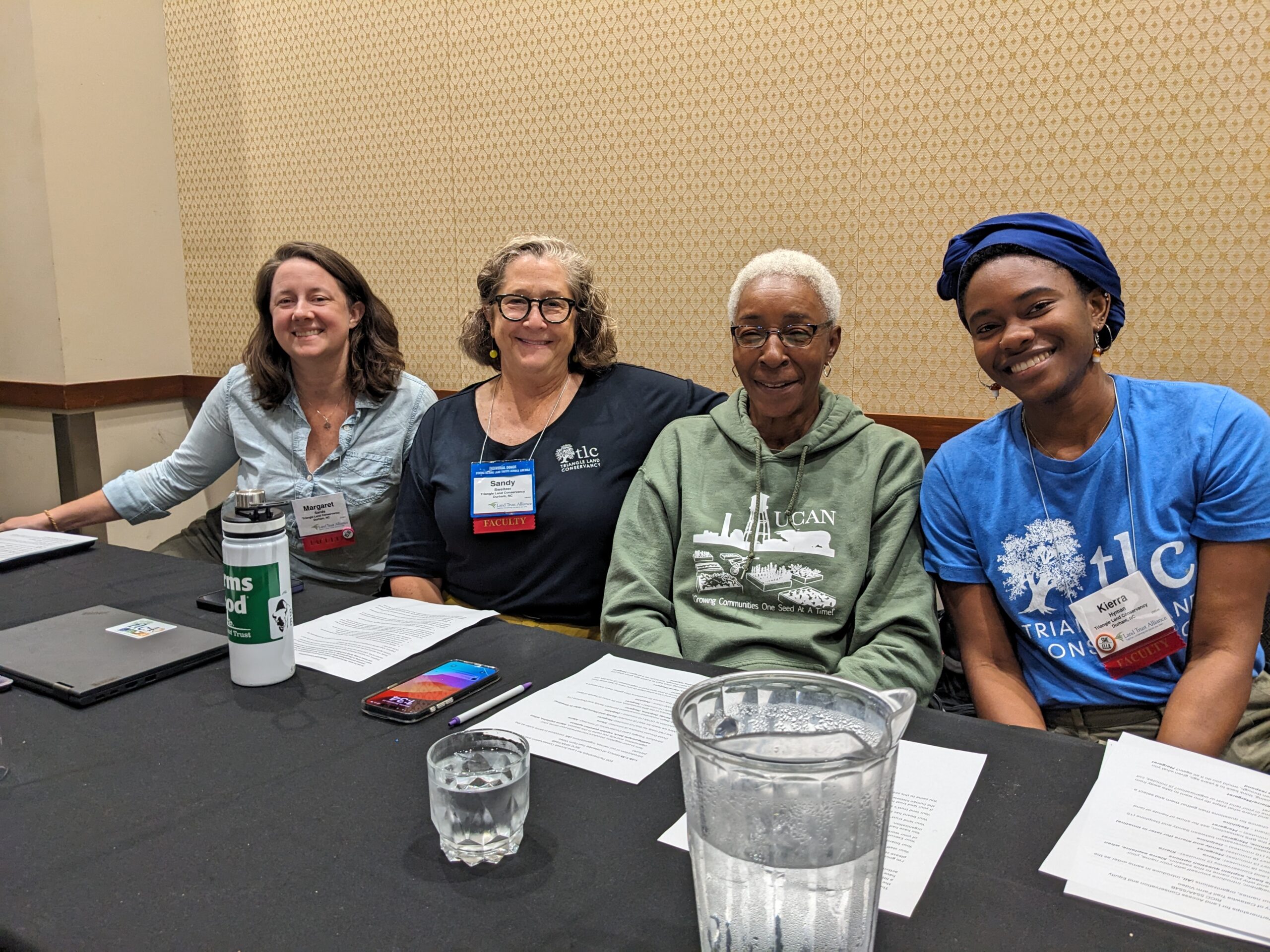
Co-founder and Executive Director of Urban Community AgriNomics, Delphine Sellars, also a former TLC board member, joined TLC staff to deliver an engaging session: Partnerships for Land Access, Conservation, and Equity.
Together with TLC’s Executive Director, Sandy Sweitzer, Good Ground Manager, Kiera Hyman, and Associate Director of Land Protection West, Margaret Sands, the panel shared the long process involved to formally transfer ownership of the 176-acre Catawba Trail Farm from TLC to the African American-led nonprofit in Durham.
Originally designated as “Snow Hill IV,” the land that became Catawba Trail Farm once belonged to one of North Carolina’s largest slave-owning families.
Ella Howie joins cohort of scholars in conservation leadership program

With future conservationists in mind, ten students from across the country were chosen to take part in a year-long professional development experience and attend Rally 2024 and participate in trainings and workshops.
Ella Howie, TLC’s Education and Outreach Intern was named one of the 2024-2025 Scholars for Conservation Leadership program.
Following Rally, two scholars will be selected to participate in a paid, year-long fellowship with a land trust to gain on-the-job experience following graduation.
About the Land Trust Alliance
The Land Trust Alliance is a national conservation organization whose mission is to save the places people love by strengthening land conservation across America. The Alliance represents nearly 950 member land trusts, including Triangle Land Conservancy, and is supported by more than 250,000 volunteers and 6.3 million members and financial supporters nationwide, who together have conserved more than 60 million acres. Based in Washington, D.C., the Alliance and has several regional offices.

