
By Patrick Boleman, Land Stewardship Manager East
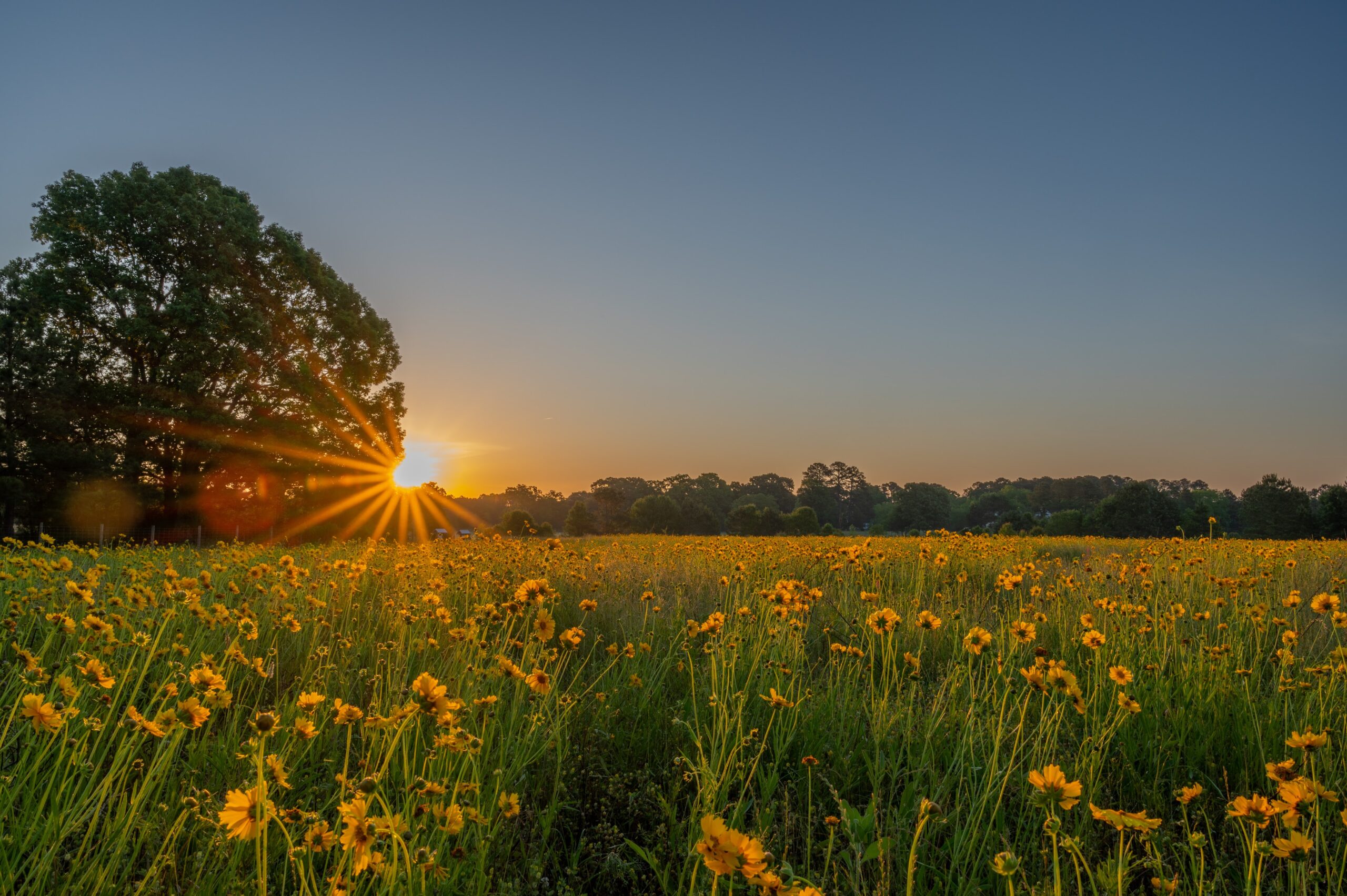
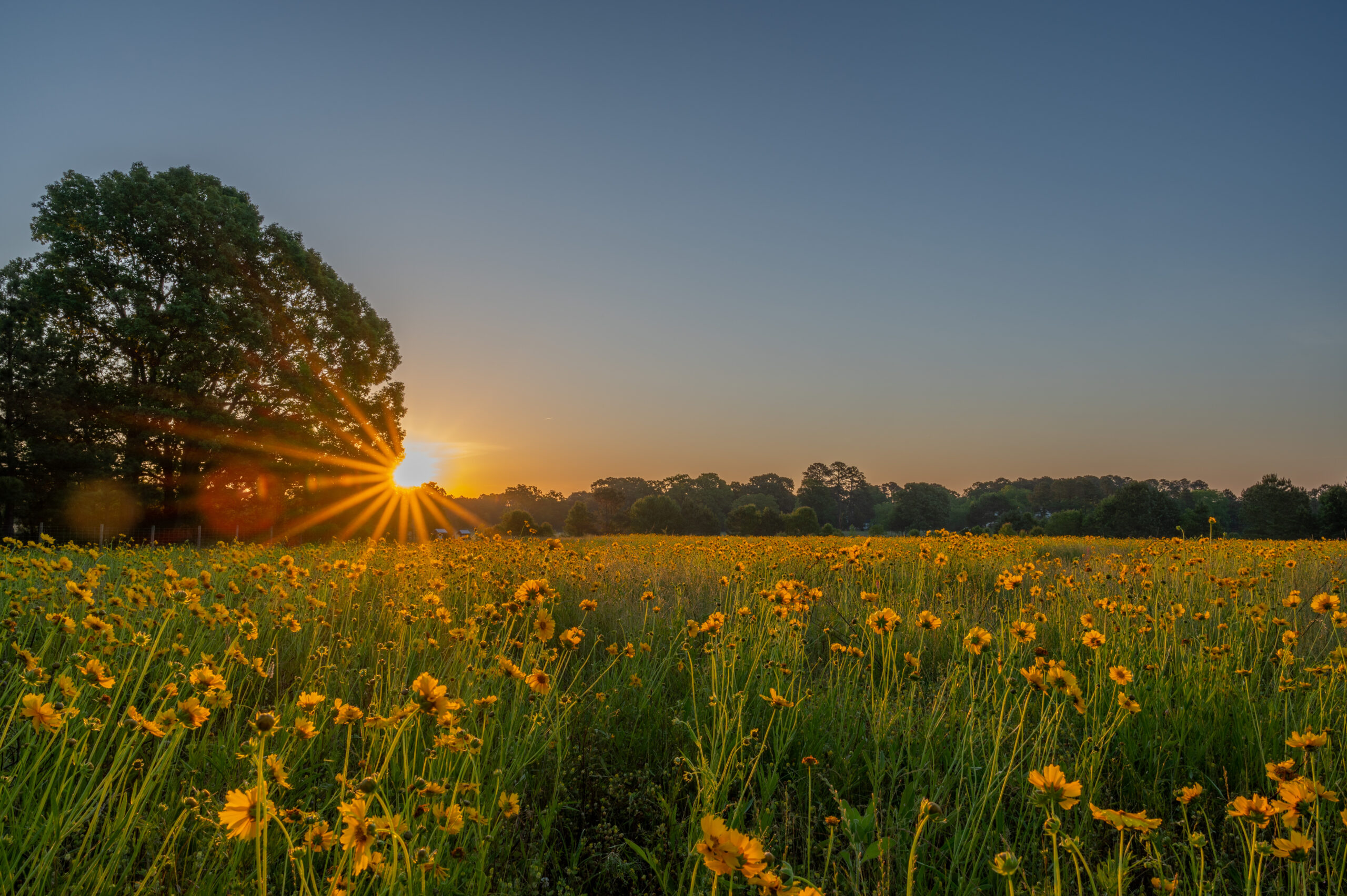
For most folks, the word “prairie” invokes romantic visions of Midwestern rolling plains stretching as far as the eye can see. Herds of bison might even dot the envisioned landscape grazing on herbaceous vegetation with few trees obscuring the viewshed. Your first thoughts may not have centered around the North Carolina Piedmont. However, prairie ecosystems were a fundamental component of the Southeastern United States only a few centuries ago.
The piedmont prairie ecosystem has all but vanished from our landscape with only a few scattered pockets of true remnants left in protected areas. These prairies were smaller in size than the Great Plains but provided invaluable ecosystem services to Indigenous peoples and pre-colonial wildlife which inhabited the Piedmont. European colonization eradicated large grazers such as elk and bison whose grazing disturbance helped maintain prairies as open habitat. Indigenous populations had managed these prairie ecosystems with fire for centuries and with their forced removal, this practice vanished. The resulting lack of disturbance allowed natural re-forestation to outcompete the disturbance-dependent piedmont prairie ecosystem. Farming and development eliminated the majority of what prairies remained.
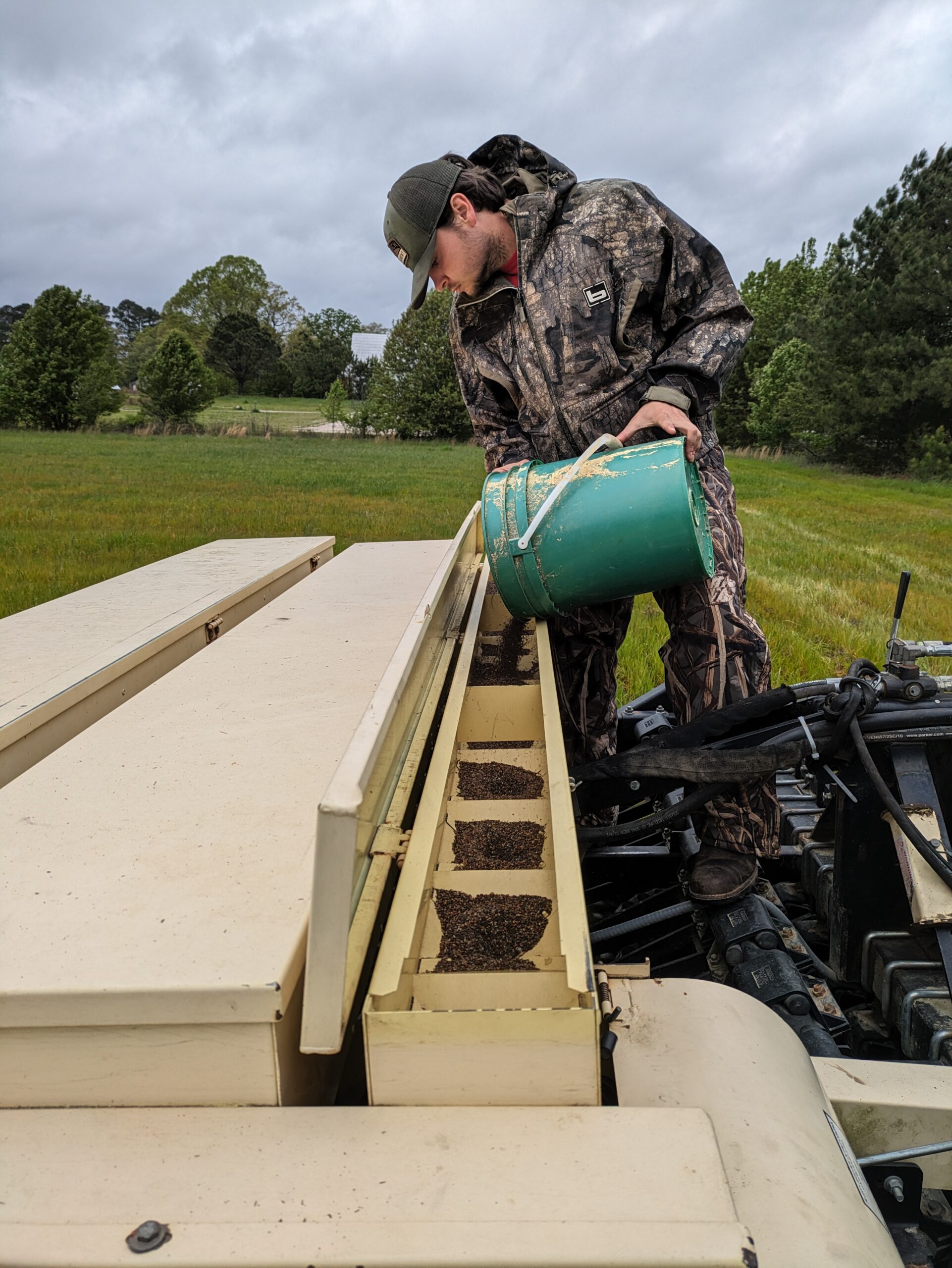
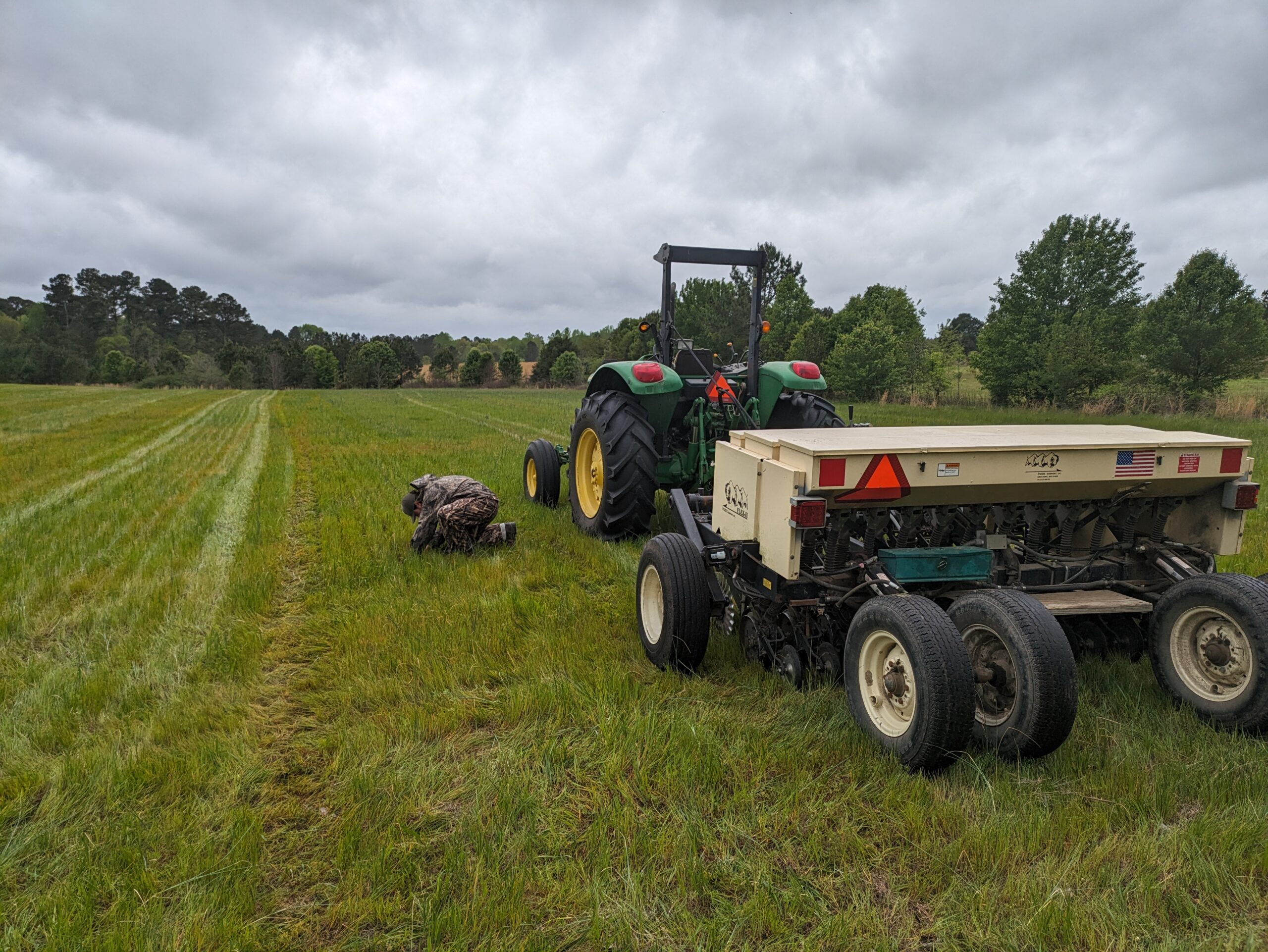
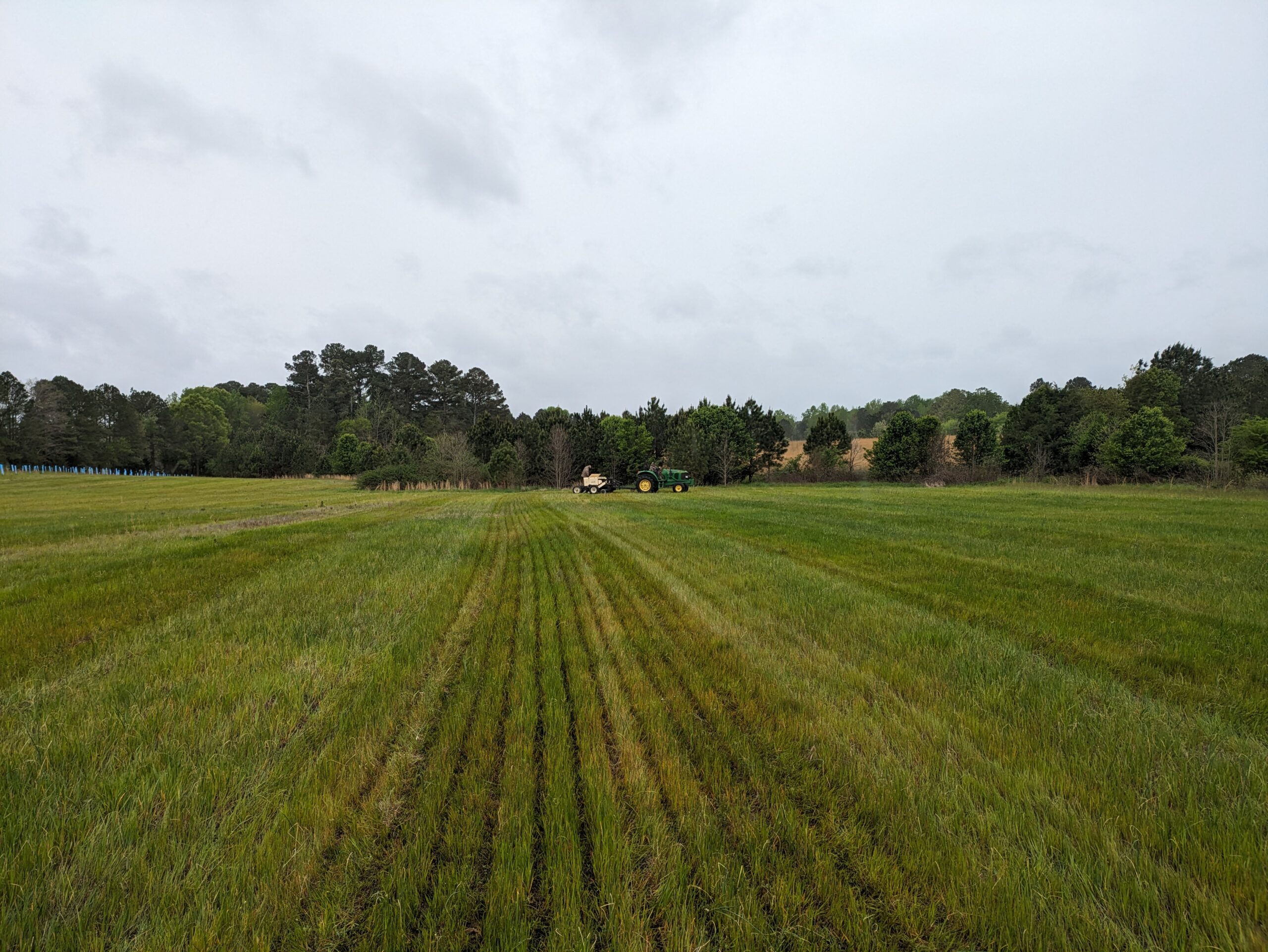
In April, TLC and Garrett Wildflower Seed Farm seeded a five-acre meadow. Photos by Patrick Boleman.
While true piedmont prairies cannot be potted and transplanted, establishing early-successional habitat can provide similar wildlife habitat and ecosystem services which have been lost. At the Bailey and Sarah Williamson Preserve, TLC is establishing a five-acre meadow to increase the conservation value of our land in our continued effort to protect natural habitats. Thanks to a grant from the Environmental Quality Incentives Program, the meadow was seeded this spring with technical assistance from Garrett Wildflower Seed Farm. The wildflower-dominated meadow will include a high diversity of native grasses and wildflowers to provide habitat value to a broad range of wildlife from pollinating insects to bipedal bird enthusiasts.

This spring’s meadow seeding is the second phase of a larger pollinator habitat improvement project. In the fall of 2022, with the assistance of TLC volunteers and the Conservation Corps of North Carolina, 400 native trees and shrubs were planted adjacent to the meadow. Twenty different species were chosen to provide a diversity of seasonal food resources and host plants for insect pollinators. Creating this “multi-dimensional” pollinator habitat has been a four-year project and TLC is excited to see it come to fruition!
While we all want a landscape of beautiful trees and flowers, please be mindful that ecosystems such as the pollinator habitat at Williamson require frequent disturbance. Occasional mowing, disking, and burning will be required to preserve ecosystem health. Please do not approach heavy equipment but feel free to ask our stewardship staff about our restoration work when it is safe to do so!

