
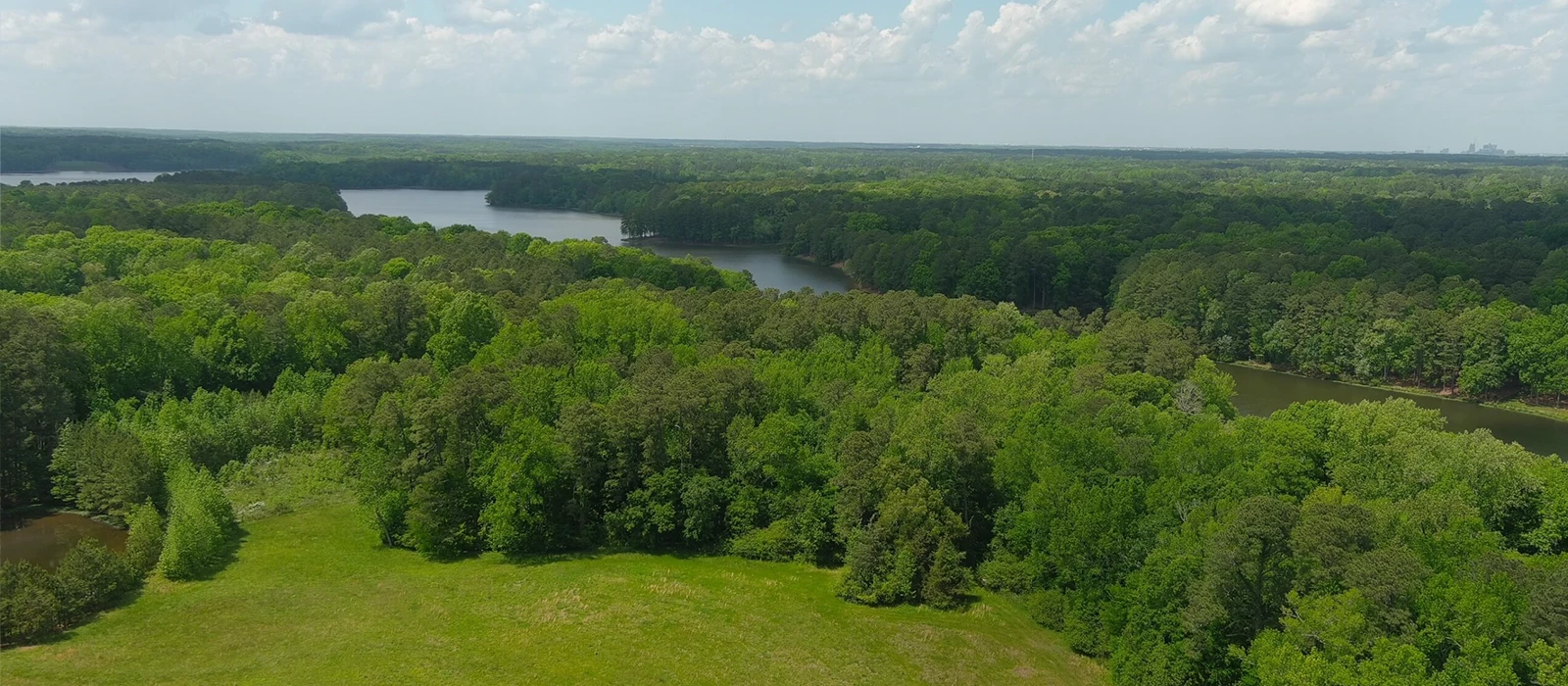
Often asked why she decided to protect her family’s land for future generations, Martha Bryan Liles credits her parents. “Any of you who grew up on a farm know that you’re taught to work the land and love the land, so that’s pretty typical,” Liles said. “What may not be typical is I was taught by my parents to share the land.”
Liles grew up on a 165-acre property along Swift Creek in Garner, North Carolina, on land that has been in her family since the 1700s. Over the years, the property has been home to a dairy farm, pastureland, and even Christmas trees – the remnants of which are still growing today.
“There were many different ways that this property was opened up to people through the years. Anything from giving away fresh vegetables, to having school groups on a trip, to thousands of people picking out their family’s Christmas tree,” Liles remembered. Until her recent retirement, Liles ran a wedding venue out of the 150-year-old Rand-Bryan House located on the property.
Collaborating to protect land
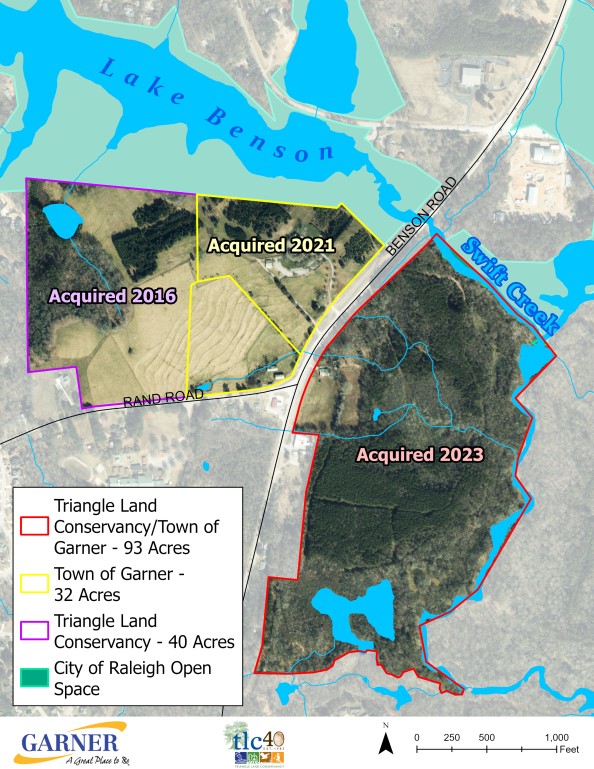
Triangle Land Conservancy has worked with Liles, along with her husband, Robert, and the Town of Garner for years now to ensure that this historic land along Swift Creek is protected forever. In 2016, TLC purchased 40 acres on the shores of Lake Benson from the Lileses, and in 2021, the couple sold an adjacent 32 acres to the Town of Garner. Now the Lileses have sold another 93 acres to TLC, which purchased the property with support from the N.C. Land and Water Fund. TLC then turned the land over to the Town’s ownership.
The 93-acre wooded property is downstream of Lake Benson and contains wetlands and streams that are part of the Swift Creek Aquatic Habitat, which is a state identified Natural Heritage Area. Within Swift Creek are six rare freshwater mussel species, including the dwarf wedgemussel and the Atlantic pigtoe, which are federally protected under the Endangered Species Act.
A future nature oasis
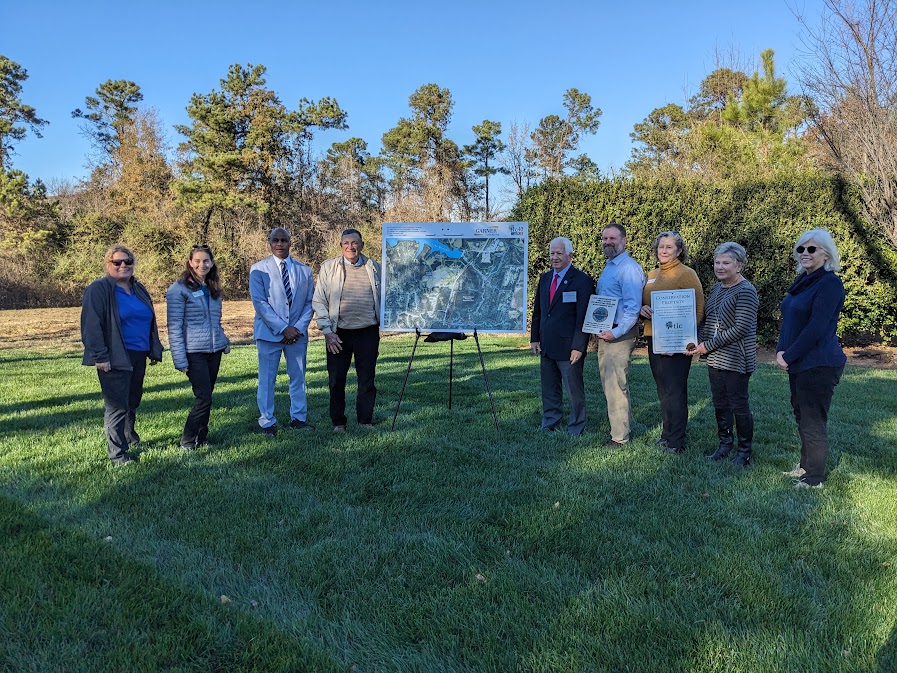
For now, the property is closed to the public, but the Town of Garner plans to open it up for public use in the future.
“The Town of Garner intends to one day open the property to the public as a nature preserve with walking trails,” said Garner Mayor Ken Marshburn. “And the site is also along the route of a proposed greenway trail that would be part of a scenic route around Lake Benson and Lake Wheeler. The property is walking distance from the Rand Road Elementary School and a new Veterans Affairs Clinic that is currently under construction, and could offer opportunities for environmental education for students, and therapeutic experiences in nature for veterans and their families.”
Water for now and the future
This latest acquisition creates a continuous block of 165 acres of forest and farmland along Swift Creek, which helps to preserve and ensure clean drinking water in Lake Benson, a drinking water supply for the City of Raleigh and surrounding communities.
“This is one of the rare projects that hits all four of the NC Land and Water Fund’s funding priorities, including protecting natural heritage, stream buffers, greenways, and sites with historic and cultural significance,” said Will Summer, the N. C. Land and Water Fund’s Executive Director.
For more on this project, check out Richard Stradling’s article in the News & Observer (PDF version here).
Watch the full remarks from the Liles Property Celebration on November 30 held at the Rand-Bryan House below.

